Gold Mining & Miners
Claims, geology, reports, prospecting, and mining support in one dedicated page.
This page pulls together the mining-side structure from The Gold App into one clearer destination. It is meant for prospectors, claim owners, mine sellers, and investors who need a cleaner view of filing, value proof, geology, and disclosure support.
Claim Systems & Filing Links
 USA
USA Canada
 Australia
A Comprehensive Guide to Gold Mining Claims
Gold mining is an exciting and potentially lucrative venture, but it is not without complexity. Whether someone is a seasoned prospector or just getting started, understanding how to properly file a gold mining claim, assess a mine's potential, and present it to investors is essential for long-term success.
This guide is designed to walk visitors through the basics of gold mining claims, how to file them, and how to prove a mine's mineral value to secure funding from banks or investors. It also explains how The Gold App can help with professional geological reports and the purchase or sale of mining claims.
Gold mining claims are legally defined parcels where a person or company has staked the right to mine. A filed claim gives mining rights subject to regulation, but it does not by itself prove that commercial gold is present or that the property is worth more than the filing costs.
When you stake a claim, you gain the exclusive right to extract minerals from the land subject to applicable rules. What you do not get automatically is proof that the land contains enough gold, or gold of sufficient grade, to make the claim profitable.
How to File a Gold Mining Claim with the BLM and State Agencies
In the United States, the filing path starts with researching whether land is open for mining, staking the claim correctly, filing a notice of location, paying the annual maintenance fee, and complying with local and environmental rules. Private land adds a separate permission layer and different legal exposure.
- Research and identify land for mining, whether through BLM systems or through private-land permission.
- File a Notice of Location with the BLM and, when required, with the relevant state agency.
- Pay annual BLM claim fees, often in the roughly $155 to $200 range depending on claim type, plus any state fees.
- Follow local regulations, environmental requirements, taxes, and reclamation rules throughout the life of the claim.
Most U.S. gold mining happens on public land managed by the BLM. If someone is prospecting on private land, they need the landowner's permission and remain subject to private-land law. In many states, filing with the BLM is only part of the process, since state-level filing may also be required.
Canada and Australia often use more direct online staking systems, but the same core principle applies: a claim is only as valuable as the underlying geology, compliance, and proof of mineral content.
How Valuable Is Your Gold Claim?
Many claims are effectively worth only the filing fees if no real geological work has been completed. Simply filing a claim does not guarantee valuable mineral deposits. Geology is the key. A professional geological report is often what separates a speculative claim from something investors or buyers can evaluate seriously.
If a claim has no proven gold deposits, or if the gold is not commercially viable, the claim may effectively be worth little more than the cost of filing. Proper geological surveys and evaluations are what begin to establish whether a claim has real value.
Filing systems differ by jurisdiction. In the United States, a claimant must often stake physically and then file. In Canada and Australia, online staking systems are more common, but land status still needs to be checked carefully before filing or renewal.
What Is a Gold Mining Claim?
A gold mining claim is a legally defined parcel of land that an individual or company has staked the right to mine. When you stake a claim, you gain the exclusive rights to extract minerals like gold from the land, subject to certain regulations. However, owning a claim does not automatically mean there is gold on the land, or that the gold is of sufficient quantity or quality to make mining profitable.
United States Claim Filing Notes
To legally mine for gold on public lands in the United States, a claimant typically files with the Bureau of Land Management and, in some cases, a state mining agency. Research comes first, then location, fee payment, and ongoing compliance. BLM land records help determine whether land is open to staking, while private land requires permission from the landowner and follows a separate legal path.
In practice, many claim owners still need to confirm the land is open, physically mark the claim where required, file a proper notice of location, and stay current with annual maintenance and local requirements. Failing any one of those steps can weaken a claim's position very quickly.
How to Prove Your Gold Mine's Worth for Investors
The value of a gold claim is not proven by filing alone. To attract investors or sell a mine seriously, the property needs geology, sampling, and disclosure work that can stand up to scrutiny. That is where geological reports, mineral resource estimates, feasibility work, and disclosure standards become essential.
To secure funding for a mine or sell a claim to serious buyers, the property must be supported by proof of mineral content in commercial quantities. That usually means geological surveys, drilling, sampling, laboratory analysis, and a mineral resource estimate based on qualified work.
Proving the Mineral Content of Your Claim
The live site emphasizes SEC modernization for mining registrants, SME-aligned mining reporting, and Canadian disclosure expectations. A strong mining report typically brings together geologist fieldwork, drilling or sampling data, mineral analysis, and a clear explanation of whether the deposit can be mined profitably.
- Geological surveys and reports define the quantity and quality of mineral deposits.
- Mineral resource estimates provide a scientific basis for financing and claim sales.
- SEC, SME, and similar disclosure standards matter when presenting projects to investors.
- Independent verification improves credibility with banks, investors, and serious buyers.
In the United States, this means paying attention to SEC expectations for mining disclosures. SME standards also matter as a best-practice framework for reporting mineral resources and reserves. In Canada, similar disclosure expectations such as NI 43-101 or comparable standards enter the conversation when projects are presented to investors or buyers.
- Geological reports and mineral reserve disclosures help prove land value.
- Feasibility studies help show whether a project can be operated profitably.
- Business plans help explain how the mine can generate returns.
This is also where The Gold App's mining-side service story belongs: helping miners, claim owners, and sellers connect with qualified geological support and investor-ready reporting.
The Gold App can be positioned here as a full-service platform for buying and selling gold mines and claims, connecting users with qualified geologists, helping arrange mining reports and disclosures, and supporting the preparation of documents for investors or potential buyers.
How to Get Funding or Sell Your Gold Mine
If someone wants to sell a claim or seek funding from banks or investors, they need to present the mine's potential clearly. That often includes geological reports, mineral reserve disclosures, feasibility work, and a business plan that demonstrates how the project can be operated and generate returns.
If a claimant wants to secure funding over meaningful amounts or gain serious investor attention, the value of the claim must be clear and the path to profitable mining has to be demonstrable. This is why professional reports and verified data matter so much.
The Gold App as a Full-Service Mining Platform
The Gold App can be framed as a one-stop-shop for miners, investors, and people buying or selling gold mining claims. That includes connecting users with qualified geologists, preparing mining reports and disclosures, and helping facilitate the buying and selling process with stronger documentation and better presentation.
- Qualified geologists for surveys, evaluations, and reporting.
- Mining reports and disclosures aligned with investor expectations.
- Support for buying and selling mining claims and mines.
Mining Methods, Geology, and Sustainability
Gold mining spans placer mining, lode mining, river mining, and emerging deep-sea approaches. Each method has different operational realities and different environmental considerations. Sustainable mining is increasingly essential, with water recycling, targeted drilling, reduced disturbance, and lower-impact extraction methods shaping the modern conversation.
Surface (Placer) Mining
Placer mining is one of the oldest forms of gold extraction and focuses on retrieving gold from loose soil, sand, or gravel. It relies on gold's higher density and often includes panning, sluicing, and dredging in riverbeds or alluvial sediments. When done carefully, placer mining can be one of the lower-impact ways to recover gold.
Placer mining often takes place in riverbeds, where natural erosion deposits gold into alluvial sediments. With a focus on low-impact techniques, it can be one of the more environmentally friendly ways to extract gold while preserving natural habitats.
Lode Mining
Lode mining targets gold in ore-bearing hard rock formations, often underground or in mountainous settings. It requires more specialized machinery, drilling, and tunneling. Modern lode operations increasingly emphasize restoration and safer processing methods.
Advanced approaches, including lower-impact processing methods, can help make lode mining safer for workers and less damaging to the surrounding environment.
River Mining
River mining is a subtype of placer mining conducted directly in river or stream beds. It involves recovering gold from embedded sediments and requires stronger care around aquatic habitats and water quality.
With stronger precautions and more modern equipment, river mining can be conducted with reduced ecological disruption, which makes it more appealing to miners who care about environmental impact.
Deep-Sea Mining
Deep-sea mining is an emerging frontier that looks at polymetallic nodules and seafloor sulfides containing valuable metals, including gold. It also raises major ecological questions and requires careful regulatory oversight.
Eco-Friendly and Sustainable Mining Initiatives
Sustainable mining is no longer optional. Net-zero goals, biodiversity conservation, renewable energy, water recycling, targeted drilling, and reduced chemical intensity all shape the future of responsible mining. The Gold App can reflect and support that direction.
Responsible gold mining is more crucial than ever. Geologists and mine planners play a key role by selecting sites and methods that yield the highest concentrations with the least disruption, helping the industry move toward cleaner and more responsible practice.
Geology in Gold Mining
Geology is central to successful prospecting. Quartz veins, greenstone belts, fault lines, shear zones, and alluvial deposits all help direct prospectors toward more promising ground. Modern field tools like XRF spectrometers, geological maps, and core drills improve decision-making while reducing unnecessary excavation.
- Quartz veins often act as carriers for gold in volcanic and mineralized systems.
- Greenstone belts are well known for hosting rich gold deposits.
- Fault lines and shear zones can provide pathways for mineral-rich fluids.
- Alluvial deposits are important indicators in placer and surface prospecting.
Essential Geology Tools for Prospecting
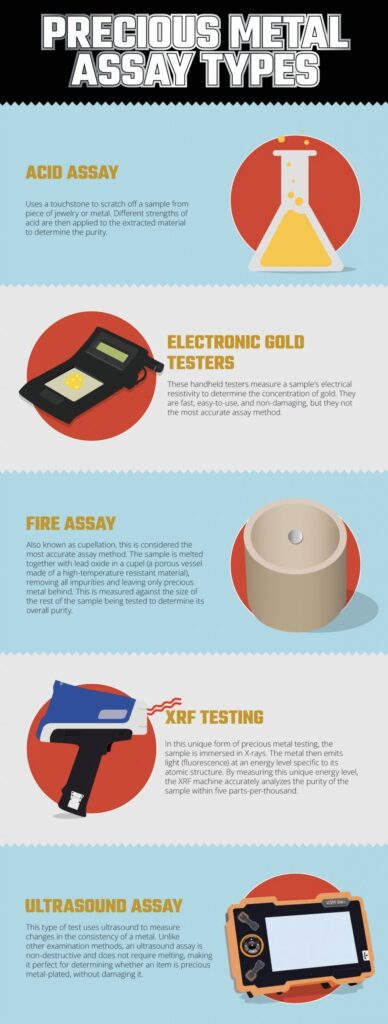
Beyond traditional rock hammers and magnifying glasses, modern prospecting benefits from XRF spectrometers, geological maps, and core drills. These tools improve precision, help reduce wasted excavation, and support better real-time field decisions.
- XRF spectrometers for fast non-destructive mineral analysis.
- Geological maps for understanding belts, faults, and ancient river systems.
- Core drills for assessing deeper ore-bearing formations.
Field Use of Spectrometers
Spectrometers allow on-the-spot analysis, more accurate geochemical surveys, and non-destructive testing that supports environmental compliance. They help prospectors and geologists make better real-time decisions in the field.
- On-the-spot analysis gives immediate feedback on potential gold presence.
- Accurate geochemical surveys make it easier to target stronger zones.
- Non-destructive testing helps reduce environmental disturbance.
Finding Gold with Geology
- Research and mapping focused on known gold-bearing environments.
- Initial field surveys using visible indicators and surface tools.
- XRF analysis for rapid mineral verification.
- Sampling and core drilling where results are promising.
Careers, Community, and Mapping
Gold mining is also a career and community ecosystem. Roles span surface miners, geologists, environmental engineers, field technicians, and compliance specialists. MSHA-oriented safety culture, training, and responsible practice all matter here.
The Gold App can carry careers, training, and community engagement together. That includes paths for people interested in geology, environmental science, field work, mining operations, compliance, and support roles tied to responsible mining.
The community side matters too. The Gold App can carry mining-group and prospecting community ties forward while using the mapping feature to help users explore verified gold locations and geological indicators from the web or app.
Mining is more than a technical field. It is also a network of prospectors, miners, engineers, investors, and enthusiasts who exchange ideas, location intelligence, operating experience, and practical field insight. The mining page is the right place to preserve that full ecosystem.
Mapping and Prospecting
For prospectors who want to locate gold on their own, the mapping feature remains a core tool. It can help users explore verified gold locations, geological indicators, and broader prospecting pathways from the web or app before moving deeper into claims, field testing, and valuation.
Assay and field testing methods are part of how miners, prospectors, and sellers move from surface indication to real proof. The live mining page pairs this with broader geology, including quartz veins, greenstone belts, fault zones, alluvial deposits, and field tools like handheld XRF spectrometers.
Select an assay type below to open the slide-out drawer. The drawer closes when you click away, close it directly, or switch sections.